Volunteering
S
o you want to get more involved in conservation? The best way to start is to volunteer. This page will direct you to resources all about volunteering in the countryside.
To find a group or activity near you have a look at the Naturenet List
of Conservation Volunteer Groups on the Web or check this helpful seach service from our friends at Do-it
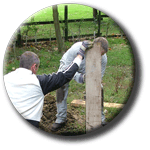 Volunteering
is a good way to find out more about your local countryside, or somewhere you
want to know more about. You meet the people who work there, and who know all
about it. You will learn skills and knowledge whilst helping to look after the
countryside. Volunteering is a great way to start a career in conservation -
to find out more about this see our Careers
page.
People volunteer to keep active after retirement, or to gain experience before
taking a paid job, or as a part of a course or award scheme, such as the Duke
of Edinburgh Award. It can also be a good way to meet like-minded people socially,
and many conservation volunteer groups also meet in the pub or people's homes
as well as actually out in the countryside. See London
and West Middlesex National Trusts volunteer group for a good example of this
sort of thing in action. Some conservation volunteers even find it a great way
to hitch up with a new partner!
Volunteering can take almost any form. There are opportunities
for people of all ages and abilities, and for those who can give lots of time
or just a little. You might even be able to work from home and still lend a
hand. You might get your expenses paid, and maybe free entry to places where
others might have to pay, or free training. But then again you might not. It
will depend on the individual arrangements you have with the people you are
volunteering for. Don't be afraid to ask before you start. You should make sure
you only promise to do what you are sure you will do - don't offer to work all
week if you think you might not turn up some days.
Volunteering
is a good way to find out more about your local countryside, or somewhere you
want to know more about. You meet the people who work there, and who know all
about it. You will learn skills and knowledge whilst helping to look after the
countryside. Volunteering is a great way to start a career in conservation -
to find out more about this see our Careers
page.
People volunteer to keep active after retirement, or to gain experience before
taking a paid job, or as a part of a course or award scheme, such as the Duke
of Edinburgh Award. It can also be a good way to meet like-minded people socially,
and many conservation volunteer groups also meet in the pub or people's homes
as well as actually out in the countryside. See London
and West Middlesex National Trusts volunteer group for a good example of this
sort of thing in action. Some conservation volunteers even find it a great way
to hitch up with a new partner!
Volunteering can take almost any form. There are opportunities
for people of all ages and abilities, and for those who can give lots of time
or just a little. You might even be able to work from home and still lend a
hand. You might get your expenses paid, and maybe free entry to places where
others might have to pay, or free training. But then again you might not. It
will depend on the individual arrangements you have with the people you are
volunteering for. Don't be afraid to ask before you start. You should make sure
you only promise to do what you are sure you will do - don't offer to work all
week if you think you might not turn up some days.
Don't worry, it's painless. Get in touch with your local
countryside service, such as a country park, Wildlife
Trust,
or National Park.
If you are a frequent visitor to a particular bit of countryside you will
probably have met the rangers or other people who work there already. These
will be the very best place to start, because they will know your local area.
Other organisations have their own volunteers who work on their particular
reserves or countryside. These include RSPB
and the National Trust.
Of course you won't want to miss the country's foremost website
for voluntary (and paid) jobs in the countryside: Countryside
Jobs Service. Many voluntary posts come up on CJS which are great opportunities
for starting a career, and can include overseas jobs as well if that's your
inclination.
BUCV
Conservation Volunteers Safety Policy:
if you are running a volunteer group and havn't got a safety policy,
you should have. This simple document is a good place to start.
• VSO: recruits
experienced volunteers to natural resources positions in some of the poorest
countries in the world. VSO has opportunities in agricultural teaching, coastal
resource management, horticulture, forestry, eco-tourism and natural resource
management. There are also opportunities to work overseas for 17-25 year olds
through the World Youth exchange or the Youth for Development programme.
• Earthwatch
Institute: matching conservation volunteers
from around the world to suitable research projects
• Volunteer Latin America:
seems to offer some genuine volunteer opportunities, not just cheap holidays!
• If you have large sums of money and a yearning for foreign travel, you
may indulge yourself by looking at Ecovolunteer.
It is very pretty and alluring, but remember -'think globally, act locally.'
• The World Guide to Voluntary Work
In Nature Conservation.
• The Global Volunteer Network.


 Pages marked with this symbol are exclusively written for
Naturenet
Pages marked with this symbol are exclusively written for
Naturenet